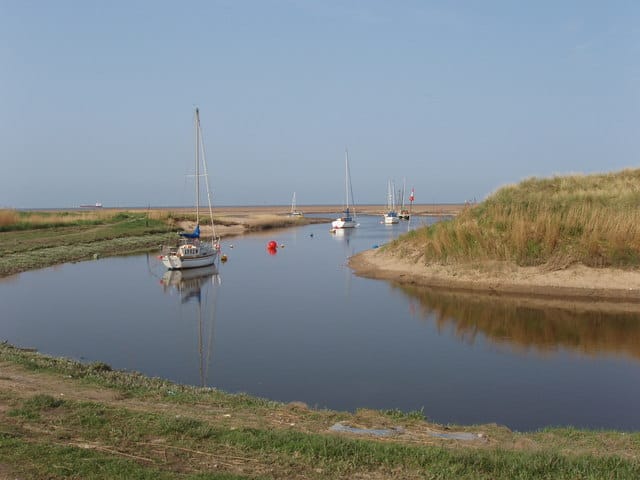
Crosby Beach sits between Liverpool and Southport and is home to the first area of beach north of Liverpool city centre. The beach is approximately 5 km of sand and sand dunes and includes Blundellsands. The beach has a significant tidal reach, and for safety reasons, it is advised that visitors to the beach stay within 50m of the promenade.
Crosby Beach is very popular with walkers as it marks the start of the 35 km Sefton Coastal Path and is dog-friendly all year round. Horses are also allowed on the beach but excluded from all bathing areas, marked by two signed flagpoles, one on each side of the area with either red or red-yellow flags flying.
Facilities at the beach include toilets, promenade, lifeguards and a choice of parking at Cambridge Road, Mariners Road and Hall Road car parks. Parts of the beach are backed by grass areas, providing an escape from the sand.
The beach can be reached on foot from Hall Road railway station, Waterloo Train Station or Blundellsands and Crosby Train Station.
Anthony Gormley’s Statues at Crosby Beach
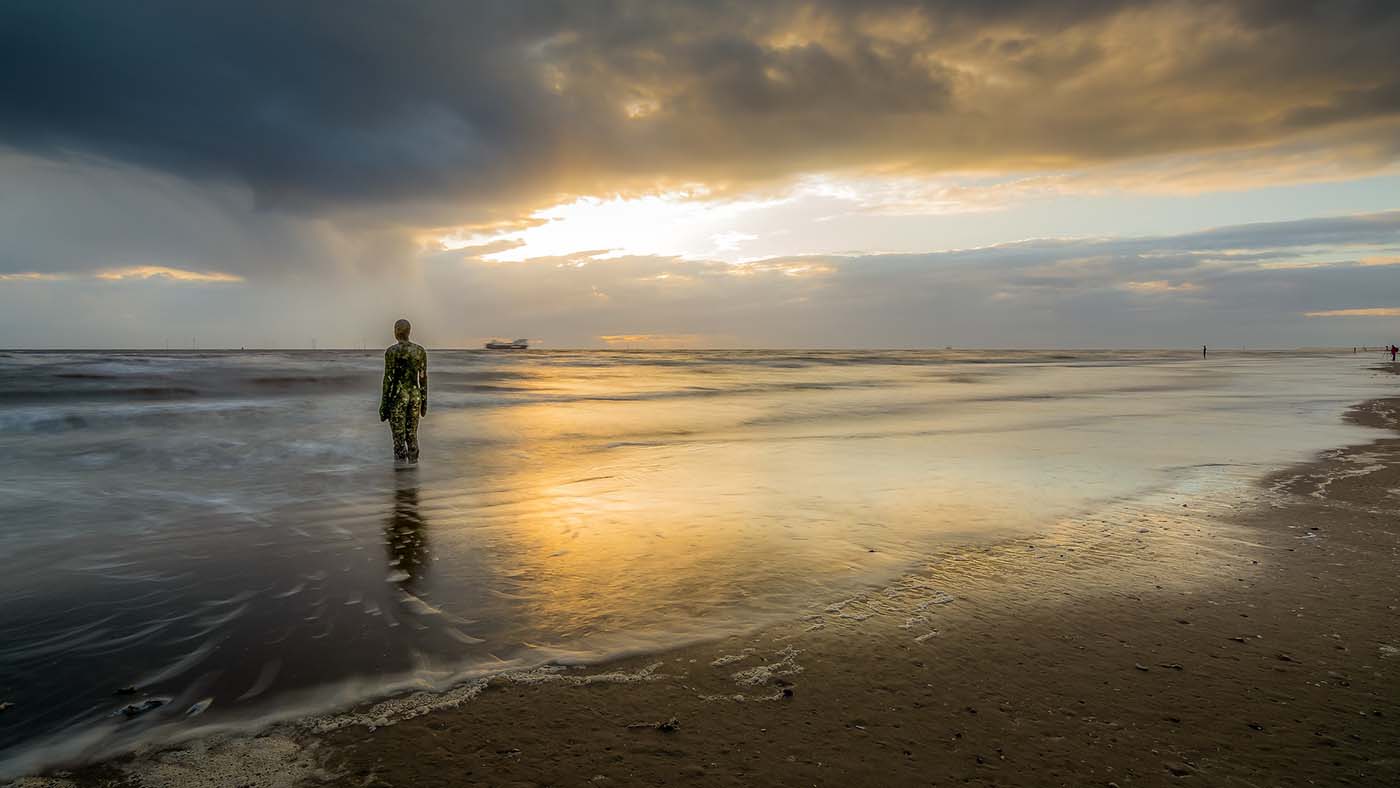
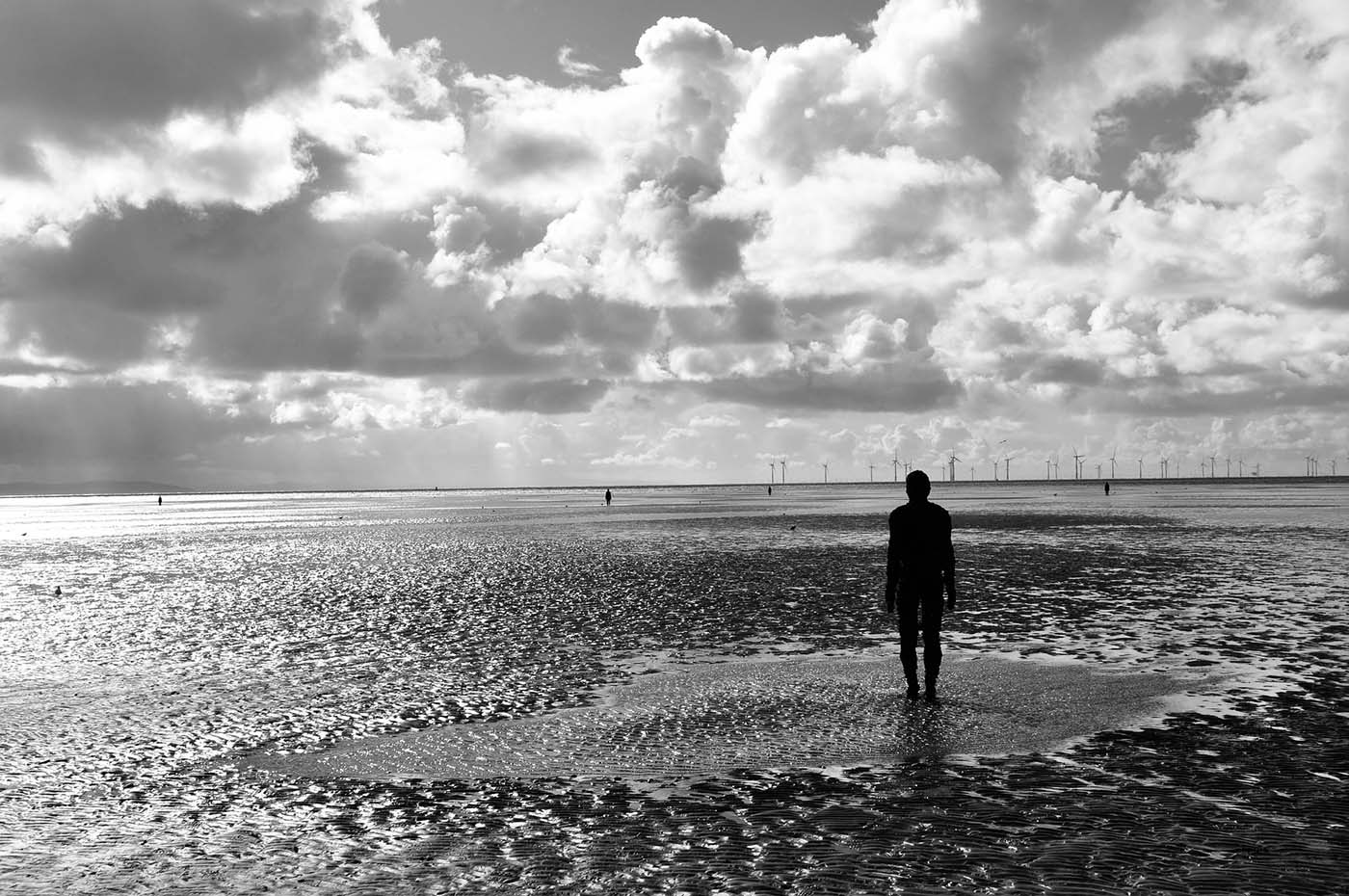
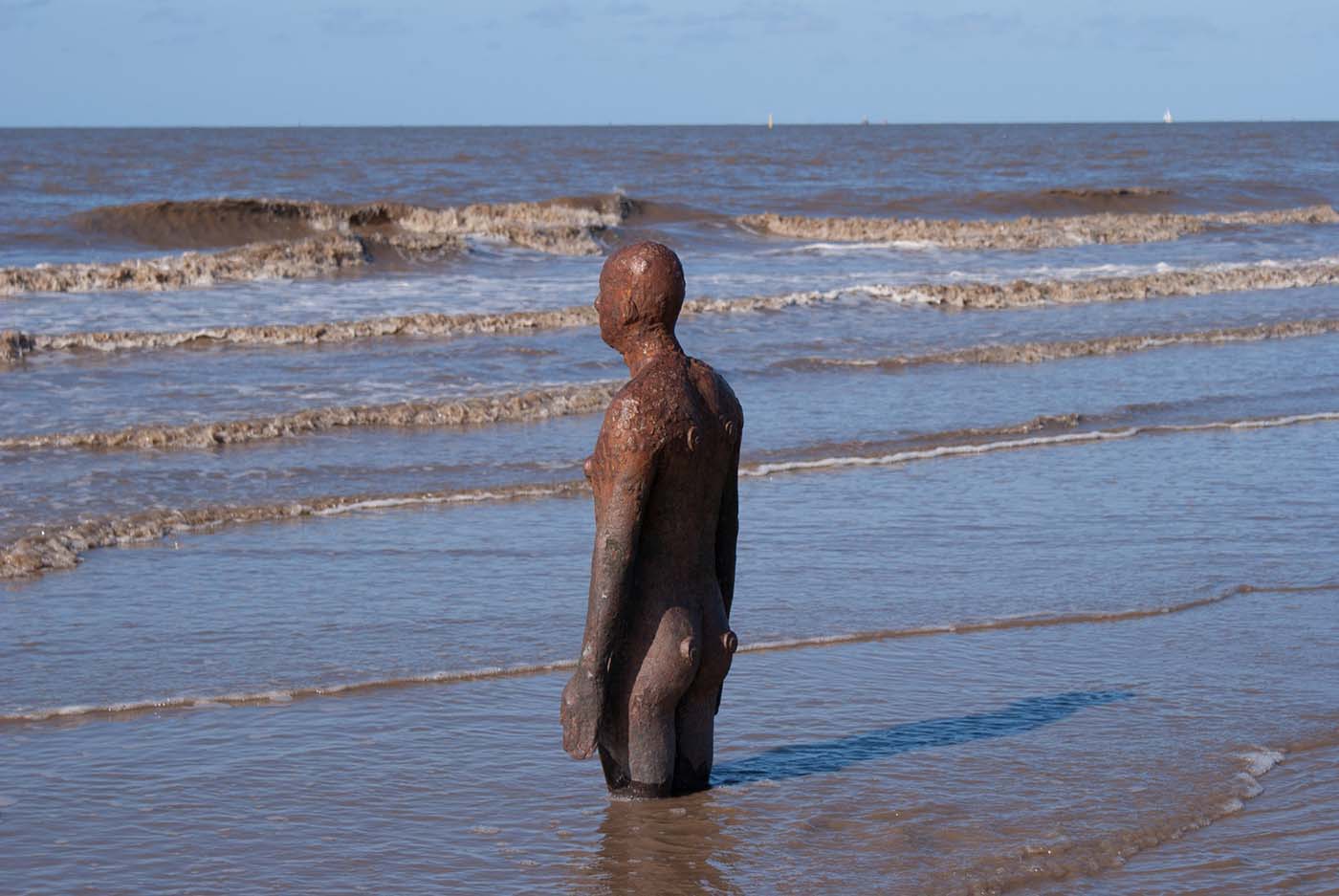
Although not a swimming beach due to the strong tides and mud, it is very popular as it is the home to Iron Men sculptures. Entitled ‘Another Place’, the 100 Iron Men are a permanent feature on Crosby Beach and the creation of artist and sculptor Anthony Gormley. Gormley is also well known for his Angel of the North sculpture alongside the A1 at Gateshead.
These cast-iron figures, which face out to sea, are spread over a 3 km stretch of the beach between Waterloo and Blundellsands. As the tides ebb and flow, the figures are revealed and submerged by the sea.
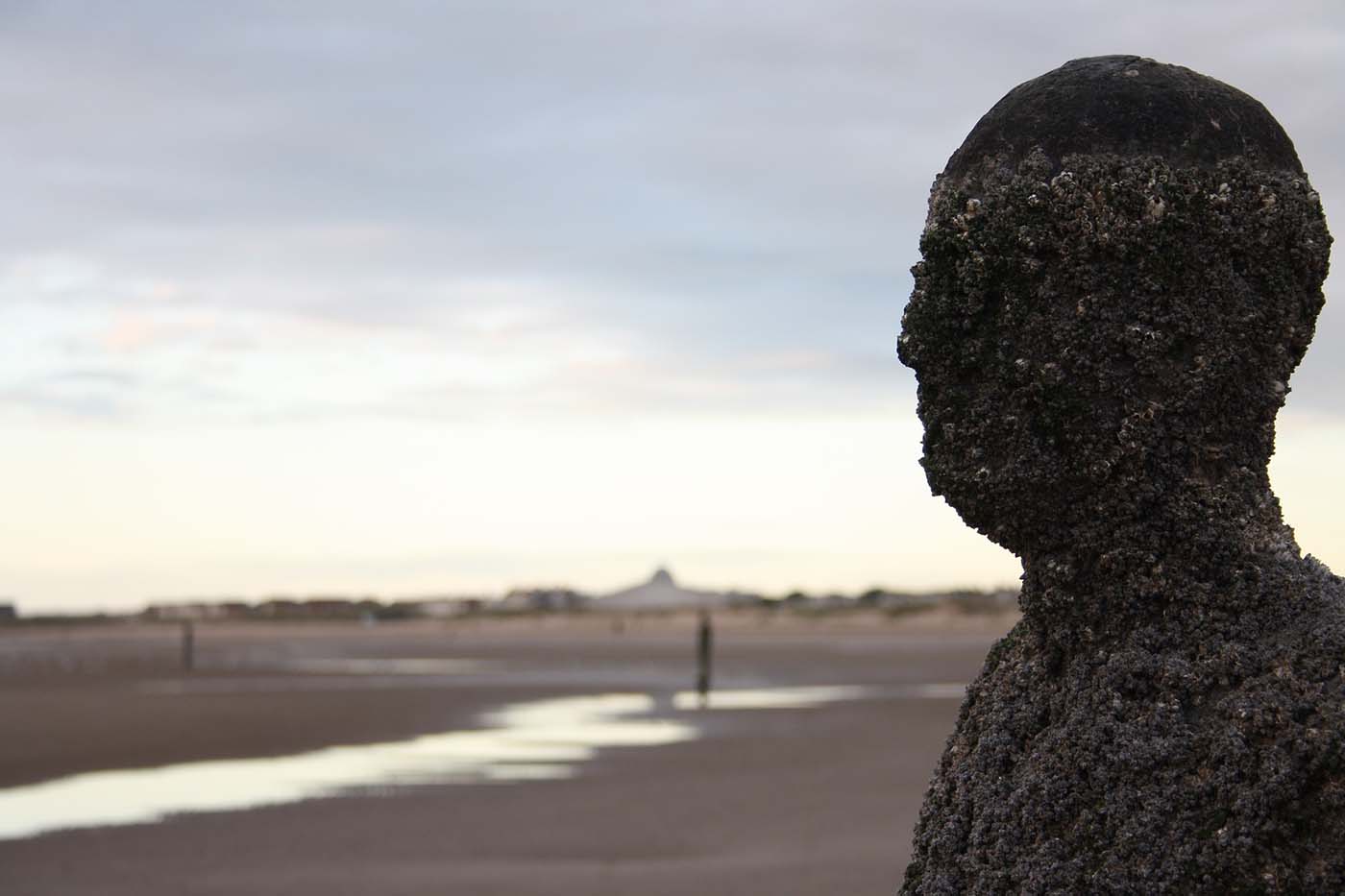
Each figure is 189 cm tall, weighs around 650 kg and is cast replicas of the artist’s body. Although they are the same, it is worth exploring as some can appear quite different due to being covered in barnacles and seaweed.
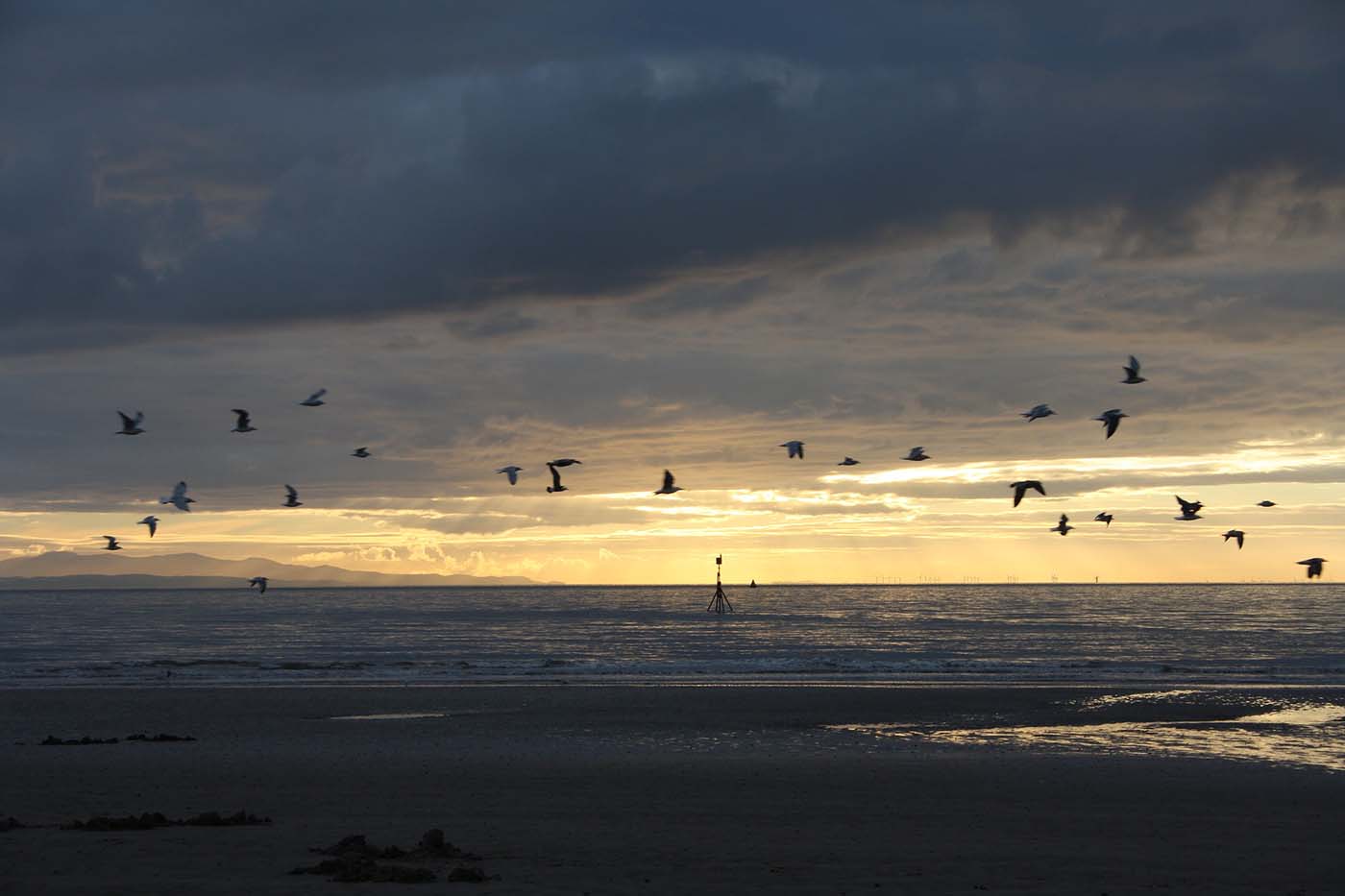
The statues offer fantastic photo opportunities, set against the backdrop of the sea and the wide-open beach, making for striking images, especially during sunrise and sunset.